
Attraction vs Values in Relationships: Which Lasts Longer?


Attraction can feel powerful. It’s the spark. The butterflies. The spontaneous conversation. The kind of chemistry that makes you think, “This must be it.”
But then real life starts asking harder questions.
Can we agree on marriage timelines?
Do we share the same views on family involvement?
What happens when the excitement settles and responsibility steps in?
This is where the real tension behind attraction vs. values in relationships begins.
What feels exciting at the beginning may not always be sustainable if there are fundamental differences in values and goals.

Many relationships start strong because the attraction is undeniable. There’s emotional pull, physical chemistry, and maybe even intellectual connection. But long-term commitment is built on your shared beliefs, compatible life goals, and similar expectations about the future.
So which is actually stronger: attraction or shared values?
The answer isn’t that straightforward. Attraction matters. It draws you people together. But values determine whether you can build something sustainable.
In this post, we’ll break down what attraction really means, what shared values look like in practice, and why understanding the difference could save you from confusion and heartbreak.
What Are Shared Values in a Relationship?
When people talk about “having things in common,” they usually mean shared hobbies or similar tastes. But your shared values go much deeper than that.
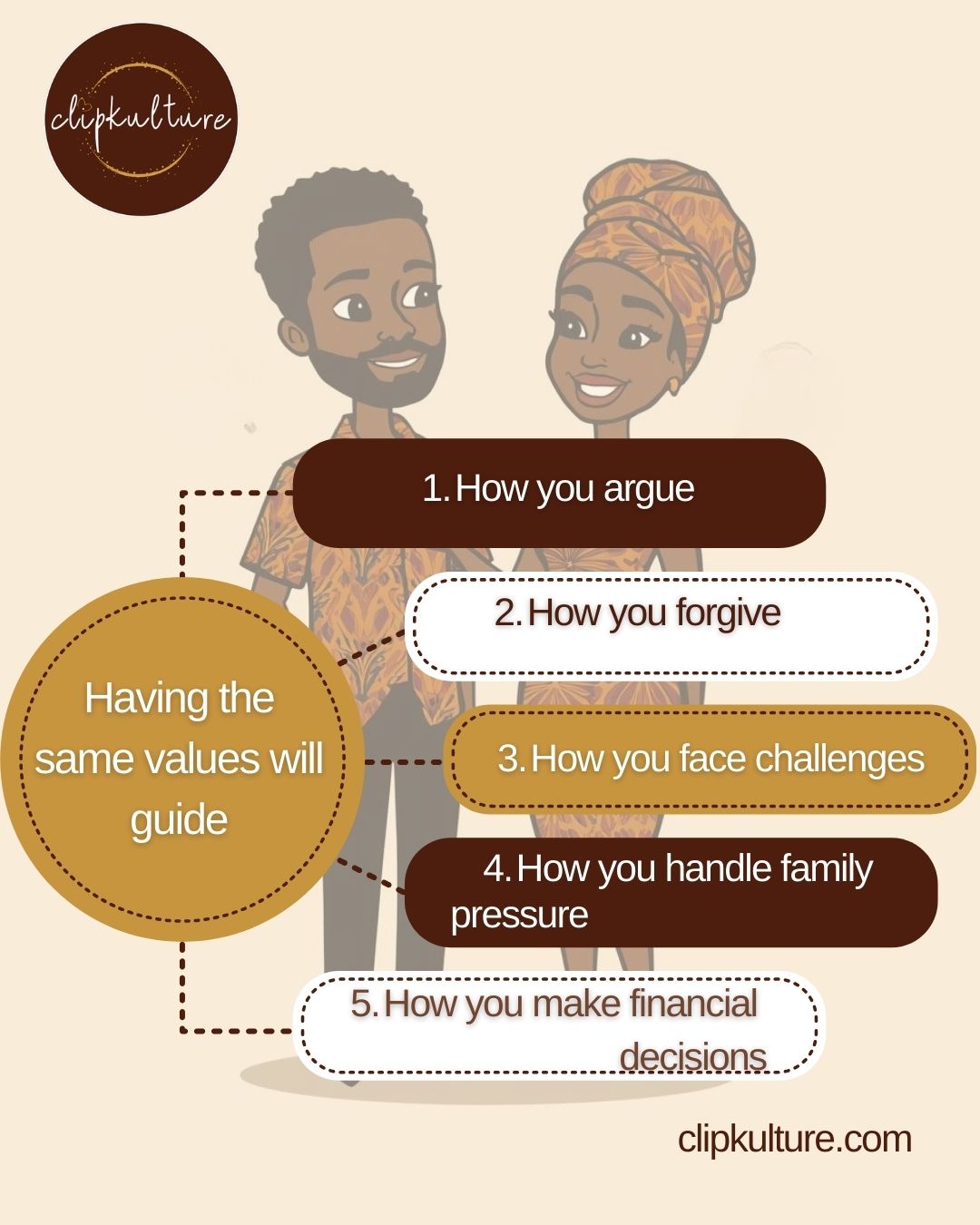
Values are the internal beliefs that shape how you make decisions, handle conflict, define commitment, and build a future. They influence not just how you love but also what you believe love should look like.
Attraction may bring both of you together, but your shared values will determine whether you can move forward and how long you will last.
Let’s break down what we mean by values.:
Core Life Values
These are the foundational beliefs that influence long-term compatibility.
1. Marriage & Commitment
- Do you both believe in marriage?
- What does commitment mean to each of you?
- Is marriage a goal or just an option?
If you see marriage as sacred and lifelong, while your partner sees it as flexible and optional, that difference will eventually surface.
2. Children & Parenting
- Do you both want children?
- How many?
- When?
- How would you raise them?
Whether you admit it or not, your parenting philosophies matter. Discipline, education, cultural upbringing, and emotional expression all stem from values that shaped you individually long before you both met.
3. Money & Financial Responsibility
Financial disagreements are one of the leading causes of long-term conflict.
Ask:
- Are we savers or spenders?
- How do we view joint finances?
- Is it what’s mine is mine and what’s his is ours?
Different money values can quietly erode stability if not discussed early.
Cultural Values
In many African contexts, relationships are not just between two individuals. They connect families, histories, and traditions.
1. Family Involvement
- How involved should family be in decisions?
- Is parental approval necessary?
- How do you handle extended family expectations?
If you value strong family integration while your partner prefers independence, tension can arise quickly.
2. Respect & Roles
Cultural expectations around gender roles, leadership, and responsibility still influence many relationships.
Important questions:
- What does respect look like in our relationship?
- How do we define leadership?
- Are we aligned on traditional vs modern role expectations like cooking, domestic work, and raising kids?
These conversations will prevent silent resentment later.
3. Community & Identity
For couples in the diaspora especially:
- How important is preserving cultural identity?
- Will you teach your children your language?
- Will you celebrate traditional ceremonies?
Faith & Spiritual Alignment
It’s important to know that faith is not a side topic; it’s your foundation.
So ask:
- Are we spiritually aligned?
- Do we share the same religious beliefs?
- How will faith influence our home?
Even if you both respect each other’s beliefs, being misaligned in spiritual values will likely affect your:
- Marriage decisions
- Parenting choices
- Lifestyle boundaries
Attraction vs. Values: What Research and Real Life Show
It’s not surprising that even research in relationship psychology consistently shows that while attraction plays a significant role in the beginning stages of a relationship, long-term satisfaction is more strongly linked to shared values, emotional stability, and compatible life goals.
In other words, attraction may start the relationship, but alignment sustains it.
5 Important Questions to Ask Before Getting Serious in a Relationship
Attraction Tends to Peak Early
Romantic attraction is often strongest in the early stages. During this period:
- Emotions are heightened.
- Differences are minimized.
- Red flags may be overlooked.
- Idealization is common.
But over time, the intensity naturally stabilizes. This doesn’t mean love disappears. It means the relationship shifts from emotional highs to practical realities.
And that’s where your values become critical.
When the excitement settles, what remains?
- Do you still agree on the direction of your lives?
- Do you handle stress in similar ways?
- Can you make decisions together without constant friction?
If you both share similar beliefs about respect, accountability, and emotional expression, disagreements become manageable rather than destructive.
But when your values clash, conflicts will feel personal and be repetitive.

The Cultural Layer: Why This Matters Even More in African Contexts
In many African communities, relationships are not isolated private agreements. They are social and cultural unions.
Marriage may involve:
- Family negotiations
- Cultural ceremonies
- Extended family integration
- Community expectations
If you both are already misaligned on values such as family involvement, tradition, or spirituality, the pressure will definitely increase when families become involved.
For couples in the diaspora, another layer of pressure is added:
- Preserving cultural identity
- Navigating different societal norms
- Raising children with cultural grounding

In Closing…
Attraction is beautiful and exciting. It’s the spark that draws two people together. It creates momentum. It makes love feel alive. But sparks, by themselves, don’t build homes.
Shared values do.
Your values shape how you both will handle pressure.
They influence how you will treat each other when emotions are low.
They determine whether your love can withstand family expectations, financial strain, health challenges, relocation, or the quiet responsibilities of marriage.
Choosing a partner isn’t just about how you feel today. It’s about whether your beliefs, direction, and long-term vision align tomorrow.
So before you commit deeply, ask yourself:
Is this relationship powered only by emotion?
Or is it supported by shared beliefs strong enough to build a life on?
Start early to have these conversations that move beyond your present feelings.
Let’s continue this conversation in the comment section below.
What Are You Looking For?
More results...


